Serbia’s populist president Aleksandar Vučić resigns to run for prime minister
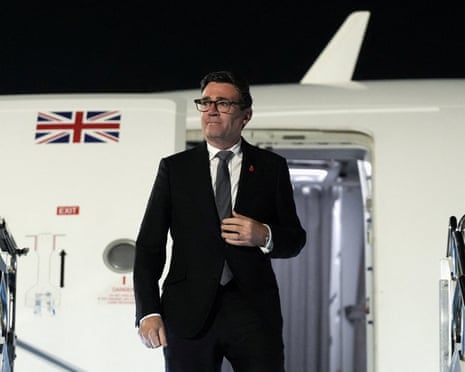
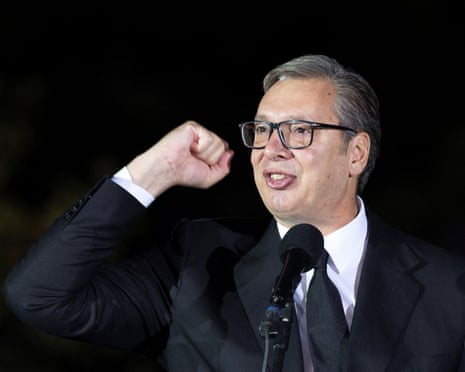
Serbia's president Aleksandar Vučić has resigned in order to run for prime minister in an early parliamentary election on 25 October, after nearly two years of anti-government protests. The vote will test his party against a student-led movement that emerged from a railway station disaster.
Written by Roundtablefrom 2 outlets' reporting
01What happened
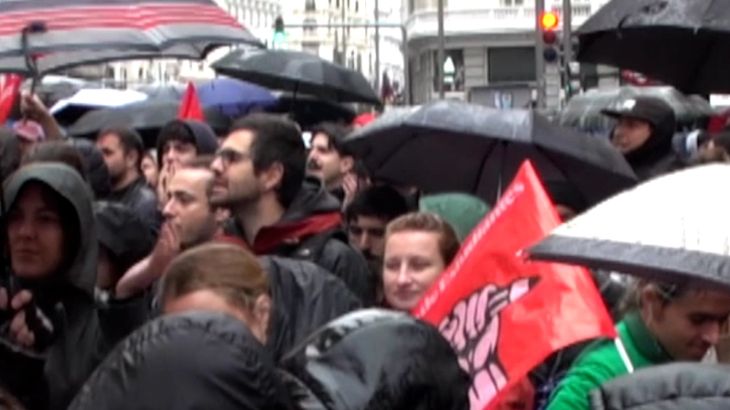
Aleksandar Vučić resigned as president of Serbia to run for prime minister in an early parliamentary election scheduled for 25 October. He was barred by the Serbian constitution from seeking a third presidential term. The election follows nearly two years of protests triggered by a canopy collapse at a railway station in Novi Sad in November 2024 that killed 16 people. A student-led movement, backed by opposition parties, is contesting the election. Parliament Speaker Ana Brnabić, a close ally of Vučić, will serve as acting president pending a presidential election. Vučić has been either prime minister or president for more than a decade.
The facts every outlet at this table agrees on.
02Every voice
One entry per outlet, in the order they should be read. Each links back to the reporting it was drawn from — check any of it.
The Guardian
Read the original· theguardian.comHow they framed it
The Guardian frames the resignation as a move to consolidate power amid widespread anti-government protests, highlighting Vučić's long tenure and the challenge from a youth-backed movement.
In their words
The Guardian reported that Vučić resigned to pursue an attempt to become prime minister in an upcoming early parliamentary election that will test his firm rule after nearly two years of protests. It said his decision is seen both as an attempt to retain a top position and to boost his party's chances against the student movement. It noted that the prime minister in Serbia is formally more powerful than the president, but that Vučić still took a dominant role during his two five-year terms.
Al Jazeera English
Read the original· aljazeera.comHow they framed it
Al Jazeera English frames the resignation as an effort to extend his hold on power after being barred from a third presidential term, with a student-led movement mounting the most serious challenge to his rule in more than a decade.
In their words
Al Jazeera English reported that Vučić resigned to seek the prime minister's post in a snap parliamentary election on October 25, as a student-led movement mounts the most serious challenge to his rule in more than a decade. It said he is now seeking to extend his hold on power through the parliamentary vote. It noted that Parliament Speaker Ana Brnabić will serve as acting president pending a presidential election, and that Vučić said one of his final acts in office was to pardon 49 people, including 23 convicted in connection with the protests.
03Where they differ
Both outlets agree on the core facts: Vučić resigned to run for prime minister, the election is on 25 October, and it follows protests sparked by the Novi Sad canopy collapse. The Guardian emphasizes Vučić's consolidation of power and his dominant role despite the prime minister being formally more powerful, while Al Jazeera English emphasizes the student-led movement as the most serious challenge in over a decade and includes Vučić's pardon of 49 people, which The Guardian does not mention. Al Jazeera English also provides more detail on the student movement's platform and quotes local analysts, whereas The Guardian focuses more on Vučić's recent activities and includes a complaint filed by the Bureau for Social Research. The framing differs in that The Guardian presents the move as testing his firm rule, while Al Jazeera English presents it as an effort to extend his hold on power.
Described, not adjudicated. Roundtable does not tell you which account is right.
04Still open
- Will the student-led movement and opposition parties be able to form a united front against Vučić's party in the October election?
- How will the acting presidency of Ana Brnabić affect the political landscape before the parliamentary election?
- What will be the outcome of the investigations into the Novi Sad canopy collapse that sparked the protests?
- Will the election be conducted fairly and transparently, given concerns about government control over institutions?
- How will Vučić's resignation and his candidacy for prime minister influence voter turnout and the election results?