BRICS summit: What are the key takeaways?
The BRICS summit in New Delhi produced a joint declaration that avoided naming the United States while criticizing global trade wars and calling for restraint in the Middle East. Two outlets covering the event chose markedly different stories to tell about what it meant.
Written by Roundtablefrom 2 outlets' reporting
01What happened
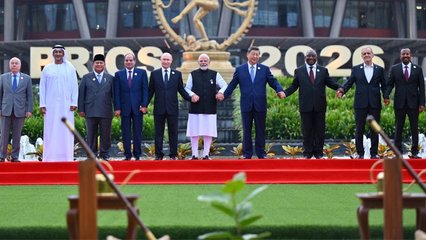
BRICS leaders held a summit in New Delhi on September 12–13, 2026, and adopted a joint declaration on the first day of the two-day meeting. The declaration called for restraint in the Middle East, criticized global trade wars without naming the United States, and avoided condemning specific countries despite divisions among members over the wars in Iran and Ukraine. Indian Prime Minister Narendra Modi said BRICS had reached a 'coming of age' moment and called on the Global South to become a 'rule-shaper' rather than simply accept rules set elsewhere. The bloc now includes eleven members: Brazil, Russia, India, China, South Africa, Egypt, Ethiopia, Iran, the United Arab Emirates, Saudi Arabia and Indonesia. Chinese President Xi Jinping and Russian President Vladimir Putin were among the leaders attending.
The facts every outlet at this table agrees on.
02Every voice
One entry per outlet, in the order they should be read. Each links back to the reporting it was drawn from — check any of it.
The Reporter Ethiopia
Read the original· thereporterethiopia.comHow they framed it
The Reporter Ethiopia frames the summit primarily as a win for Ethiopia, highlighting endorsement of its WTO bid and support for Addis Ababa taking on key global roles.
In their words
The BRICS summit endorsed Ethiopia's bid to join the World Trade Organization and backed key global roles for Addis Ababa.
Al Jazeera English
Read the original· aljazeera.comHow they framed it
Al Jazeera English frames the summit around the New Delhi Declaration's diplomatic balancing act, emphasizing what the bloc avoided saying about the US, Israel and Iran, and Modi's call for the Global South to shape global rules.
In their words
BRICS leaders adopted the New Delhi Declaration at their 2026 summit, calling for restraint in the Middle East and criticizing global trade wars without naming the US. The declaration avoided condemning specific countries despite divisions over the wars in Iran and Ukraine, with India's Modi emphasizing the bloc is not anti-Western and should help the Global South shape global rules.
03Where they differ
The two outlets chose different focal points. The Reporter Ethiopia leads on a specific outcome for one member country — endorsement of Ethiopia's WTO bid and support for Addis Ababa's global roles — and frames the summit through that national lens. Al Jazeera English leads on the collective declaration, its omissions, and the internal divisions among members over Iran and Ukraine. Neither outlet contradicts the other on any stated fact; the difference is in emphasis and the level of analysis: one reports a concrete benefit for Ethiopia, the other reports the diplomatic language and limits of the joint statement.
Described, not adjudicated. Roundtable does not tell you which account is right.
04Still open
- What exact language in the New Delhi Declaration addressed Ethiopia's WTO bid or its global roles, and which members backed it?
- How did the divisions over the wars in Iran and Ukraine shape the final text of the declaration?
- What does 'rule-shaper' mean in practice for the Global South, according to Modi or the declaration?
- Did any member state publicly object to or distance itself from the declaration's wording?